Blog · Kitesurfing ·
How long does it take to learn kitesurfing? A beginner’s timeline from Yedidalga, North Cyprus
Most beginners need about 6 to 12 hours of lessons with a good instructor before they can ride on their own — some need more. With professional training you learn the basic skills in at least 6 hours. Our beginner courses in North Cyprus have 8 hours, so you have time to practise. How fast you go depends on the wind, the spot, how often you train and what you bring with you: board sports, confidence and a bit of patience.
Unlike many sports, kitesurfing is not counted in months of training but in hours of lessons — and then refined over many happy sessions. Here is what those first hours look like, step by step, and how to plan them so you get the most out of every one.
Kitesurfing for beginners: hours, not weeks
The first goal is not to jump or to do tricks. The first goal is to be independent: to set up your equipment, launch and land the kite with a helper, ride in both directions and stay upwind, and to know what to do when something goes wrong.
You are ready to stop taking lessons when you can manage your equipment and your safety by yourself. For most people that takes one complete beginner course and some practice afterwards — not years. You don’t need a licence to kitesurf on your own, but you do need these skills.
A typical beginner timeline, step by step
Our 8-hour beginner course follows the IKO standard. Every student moves at their own pace, so think of these steps as a path, not a timetable.
Step 1: the beach, the wind and your first kite
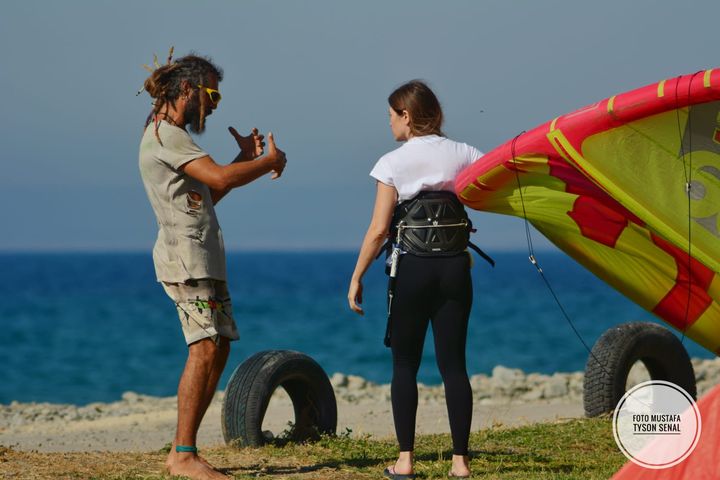
You start on land. You learn to read the beach and the wind, you understand the wind window — the area in the sky where the kite can fly — and you fly a small trainer kite. This is what the 2-hour Kite Intro (€90) covers, together with flying a real kite for the first time.
Step 2: set-up, safety and launching
You set up the equipment yourself and learn the safety system: how to depower the kite and how to release it. Then you learn to launch and relaunch the kite with your instructor. Beginners should never launch or land alone — there is always someone to help.
Step 3: body drag
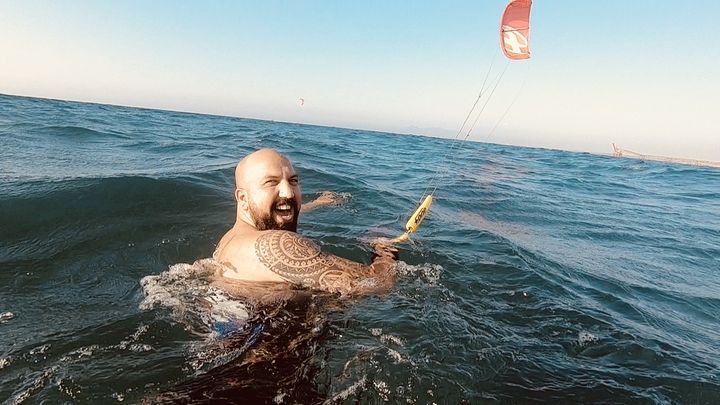
Now you go into the water without a board. The kite pulls you through the water, first downwind and then upwind. You practise relaunching the kite from the water, and then you body drag with the board in your hand — the skill you need to get your board back after a fall.
Step 4: the water start
This is the big moment: you put your feet in the straps, steer the kite and stand up on the board. You learn all water-start techniques and practise until you can stand up on both sides. Most people need the most patience here — and it feels wonderful when it works.
Step 5: riding, upwind and your first transitions
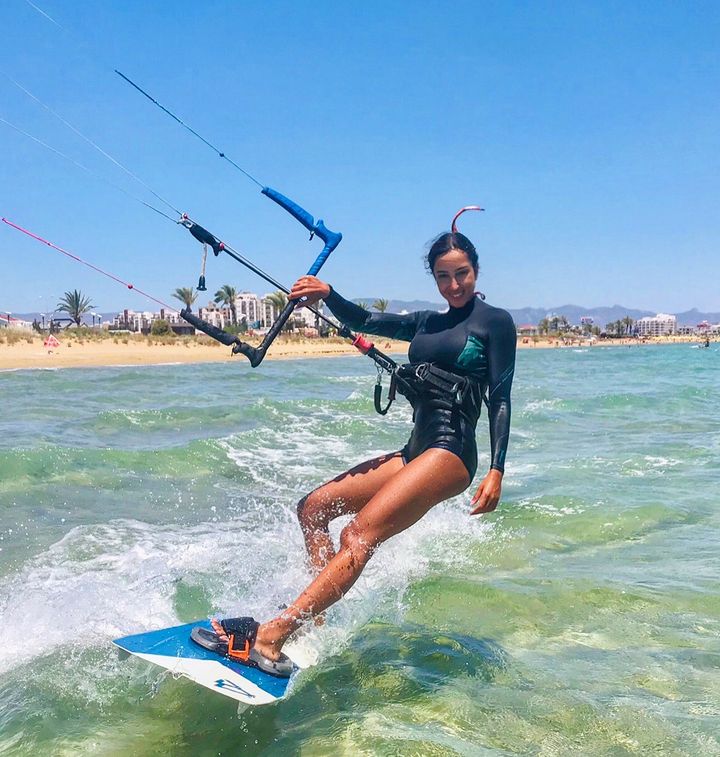
Finally you learn self-rescue, the right of way on the water, riding upwind and your first transitions (changing direction). When you can stay upwind, you can come back to where you started — and that is when kitesurfing really begins.
IKO levels: what your kiteboarding card says
The IKO (International Kiteboarding Organization) describes your progress in levels. The first three are the ones every beginner goes through:
- Level 1 — Discovery: wind window, set-up, safety and flying the kite.
- Level 2 — Intermediate: body drag, relaunching the kite from the water and your first water starts.
- Level 3 — Independent: controlling your speed, riding upwind and kitesurfing on your own.
The IKO gives average hours for each level, but they really are averages. Every course at Heaven Surf House comes with an IKO kiteboarding card: an international card that records the level you have reached. Show it at kite schools and rental centres around the world, and they can see what you can do.
What affects how fast you learn kitesurfing
Two people can take the same course and learn at very different speeds. These are the things that make the biggest difference:
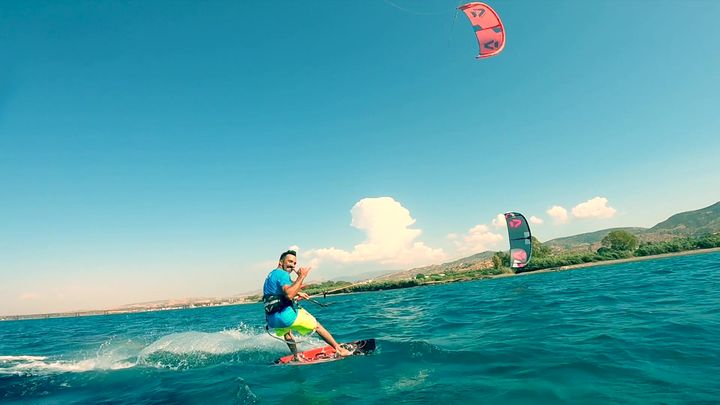
- The wind. Steady wind is easier to learn in than gusty wind. At our spot in Yedidalga a thermal wind of around 20 knots blows side-onshore in the season — one of the safest directions, because it does not blow you out to sea.
- Lessons on consecutive days. This is our most important tip. Once-a-week training slows your progress and your motivation; a few days in a row keep everything fresh.
- Board sports. If you snowboard, wakeboard or surf, standing on the board often comes faster. Windsurfers sometimes need a moment at first, because they are used to controlling the power differently.
- Communication with your instructor. In our lessons you wear a waterproof radio helmet, so your instructor can talk to you on the water and correct you right away.
- Good equipment. For the lessons we use stable kites that make learning easier and safer, the wetsuit is included, and you wear a life vest in the deep water.
- Being relaxed. Tension makes everything harder. Breathe, smile and take breaks.
Age and fitness
Kitesurfing needs technique and skill rather than strength. The harness carries the pull of the kite and your arms only steer, so weak arms are not a problem. There is no maximum age, and basic swimming skills are enough. Learning with more body weight may be a bit harder, but it is possible. Children can take lessons with us from the age of 12 — the kite size is always chosen for the rider’s weight and the wind.
Private or group kite lessons?
Both work — it depends on how you like to learn. These are our beginner options (all lesson equipment included):
- Private beginner course — €599 · 8 hours · your own instructor. All the attention is on you, and the lessons follow your pace.
- Small-group beginner course — €799 for both together · 8 hours · max. 2 people. The same programme for two students together: learn with a friend or your partner, watch each other and share the fun.
- Private beginner camp — €699 · 8 hours of private lessons, 6 days and 5 nights of camping in our tent at the beach, plus a 25% discount on paddle-board rentals. You live at the spot, so you can take every good wind.
- Not sure yet? Start with the 2-hour Kite Intro (€90), or the Kite & Camp weekend (€99.90): a discovery course on land with one camp night, for max. 3 people, on request.
All details and the full programme are on our kitesurfing lessons page.
After the course: practice, supervision and the next step
Your first sessions after the course are where the skills settle. You don’t have to do them alone:
- Supervision — €40 for 1 hour, equipment included. We watch you and assist you while you kitesurf: a good next step after your course, or when you are new to the spot.
- Refresh package — €299 for 3 hours, with your own equipment. Back on the water after a long break? We go through everything again from the beginning.
- Rentals — full kit (kite and board) from €40 for 2 hours; we need proof of your experience, for example videos of you kiting. See our kite rentals.
- Kite foil lessons — €400 for 3 hours, equipment included, when you are ready to fly above the water.
How to plan your learning holiday
The main kite season in Yedidalga runs from April to October. To learn in one go, plan about a week at the spot: enough for an 8-hour course on consecutive days, with time to practise. Wind is nature, so give yourself a few spare days — then one calm day does not cut your course short. And a day without wind is not wasted: we do the theory, the equipment set-up and more on land.
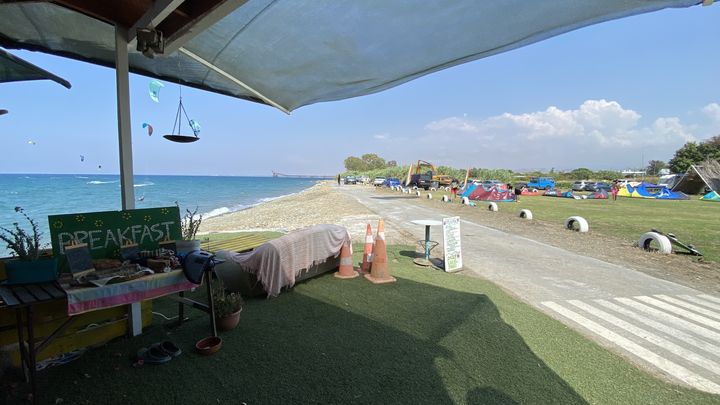
Living next to the beach helps a lot: from Heaven Camping you walk to the kite beach in a few minutes, and between lessons you rest under the trees. Before you come, check the live wind in Yedidalga, read which months are best for kitesurfing in Cyprus and look at our kite and camping packing list. More questions? Our kitesurfing FAQ has many more answers.